Tuesday, April 30, 2013

Valença do Minho

Valença do Minho, (Norte Region) Portugal

Valença do Minho sits alongside the River Minho which acts as a natural border separating Portugal from Spain.  When walking around you notice numerous defense walls that served to protect the city from invasions centuries ago.  Click here to get a bird's-eye view of this fortified town and I guarantee you will be impressed with what you see.

Bird's eye view picture taken from http://ntransfers.com/blog/2011/07/valenca/

Monday, April 29, 2013

blue

Valença do Minho, (Norte Region) Portugal

The power of blue... It puts me into a completely different frame of mind.

Saturday, April 27, 2013

simple touches

Braga, (Norte Region) Portugal

Rich in culture and history, the area surrounding Braga has been inhabited since the Neolithic era.  Today, Braga is the third most populous city in Portugal.  Details with doors, windows and balconies abound.

Friday, April 26, 2013

abandoned beauty

 
Valença do Minho, (Norte Region) Portugal

Beauty is all around us.  We just need to open our eyes.

Thursday, April 25, 2013

simplicity

Valença do Minho, (Norte Region) Portugal

Each and every balcony is a work of art.

Wednesday, April 24, 2013

green

Braga, (Norte Region) Portugal

Each building has its own unique features, each balcony somewhat different than the rest...

Tuesday, April 23, 2013

a splash of color

Braga, (Norte Region) Portugal

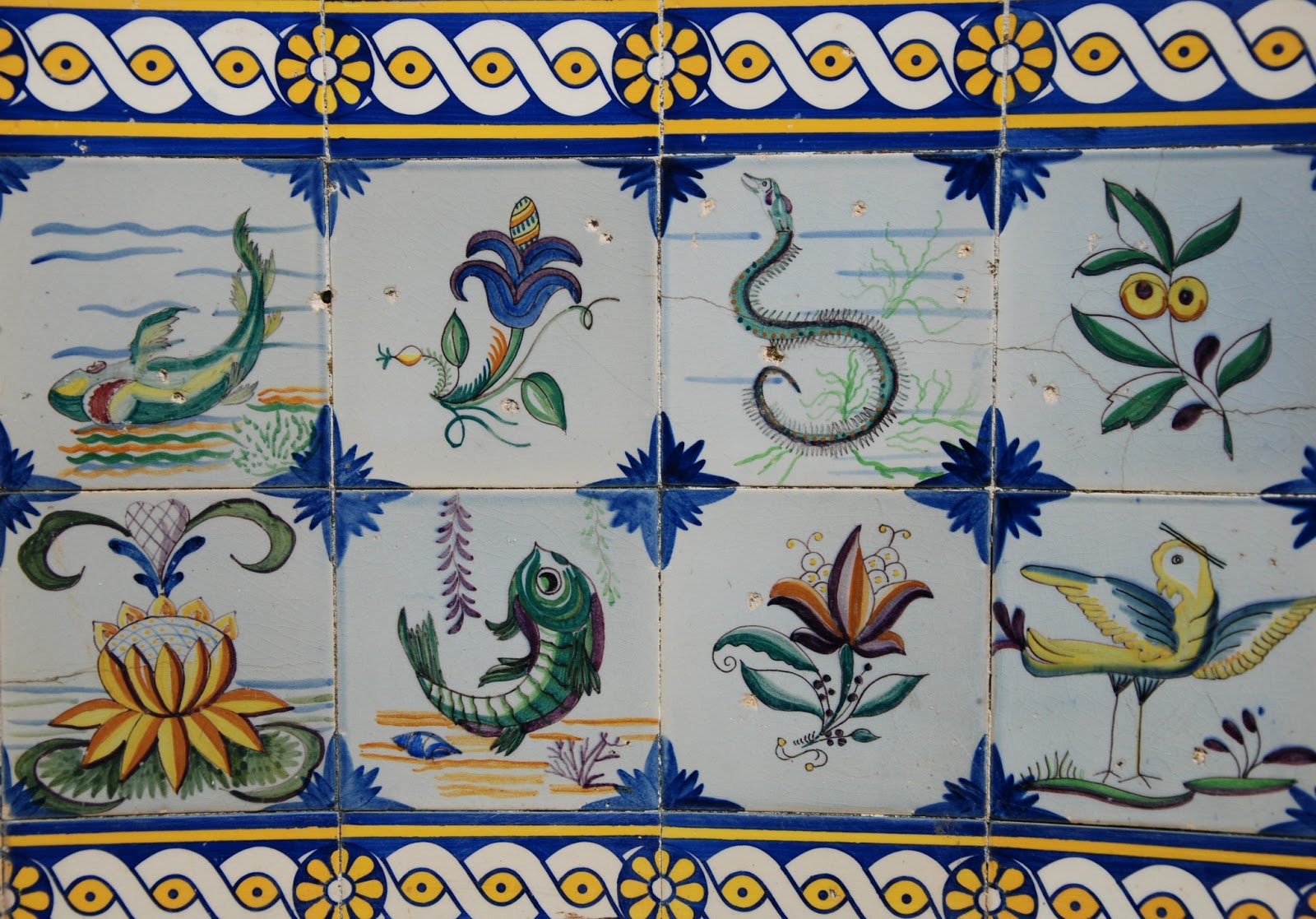
Ceramic tiles come in a wide assortment of colors and, for me, add a splash of color to my walk around any town!

Monday, April 22, 2013

ceramic tiles and balconies

Valença do Minho, (Norte Region) Portugal

Ceramic tile façades and wrought iron balconies are a wonderful sight in Portugal.

Sunday, April 21, 2013

Saldaña

Saldaña, (Palencia) Spain

Plaza Vieja, a square originating from the 10th century and later constructed as you see it now between the 16th and 18th centuries, was home in the year 1128 to one of the first known bullfights taking place in Spain to celebrate a wedding in the Royal family.

Saturday, April 20, 2013

a stop on the way to St. James

Burguete/Auritz, (Navarra) Spain

This small town set in the Pyrenees Mountains resting alongside the French border is one of the many towns and villages to be visited along the Camino de Santiago (the Way of St. James), the ancient pilgrimage route to Santiago de Compostela.  Starting this route in Spain at the French border can take, on average, 4 weeks to cover its almost 750 kilometers.

Ernest Hemingway also mentions Burguete in his 1926 novel, The Sun Also Rises, after staying here for a fishing trip on his way from Paris before heading to Pamplona to see the running of the bulls.

I especially remember this town, early one still morning, walking down the only street that crosses this village from one side to the other, and hearing the trickle of water flowing in tiny canals that line both sides of its main street.  The white houses with red trim have also left a mark on my ever so memorable first day of the Camino.


Seen in this picture is the Church of San Nicolás de Bari.

Friday, April 19, 2013

balconies

Pamplona, (Navarra) Spain

So many different balconies, each one with its own beauty...

Thursday, April 18, 2013

Sagres

Sagres, (Algarve Region) Portugal

This magnificent rocky coastline makes up the southwestern most tip of Portugal and forms yet another part of the 110 kilometers of the Southwest Alentejo and Vicentine Coast Natural Park.  The land has almost no vegetation at all here and is quite flat, abruptly dropping several meters when it reaches the Atlantic Ocean.  When standing at the edge of these cliffs, it seems as if you were standing at the end of the Earth!  It's really quite impressive to see in person!

Wednesday, April 17, 2013

Igreja Matriz de Nossa Senhora da Conceição

Vila do Bispo, (Algarve Region) Portugal

This 18th century church is another example of the beautifully painted churches that exist in the south of Portugal.  Its interior walls are completely lined with blue and white ceramic tiles with a hand painted wooden ceiling over the nave.

Tuesday, April 16, 2013

Mértola from a distance

Mértola, (Region of Alentejo) Portugal

In this picture you can see the castle of Muslim origin, but reconstructed after the town was taken over by the Christians.  The once mosque, now a church, sits just below the castle to the right.  There are many excavations taking place today exhibiting numerous archaeological finds from Roman houses that existed next to the wall of the city as well as other objects (pottery, glassware, metalwork, coins) from the almost 500 years of Islamic rule.  Mértola is a museum in and of itself!

Monday, April 15, 2013

Mértola up close

Mértola, (Region of Alentejo) Portugal

Mértola is a fascinating town sitting on a hill overlooking the Guadiana River and is filled with a rich history.  Set in a very strategic location, this town served as a very important fluvial commercial port in times of the Phoenicians, Carthaginians, Romans and Moors by transporting agricultural products and area minerals to what is known as present day Spain and Northern Africa.  The Moors ruled in Portugal for almost 500 years (until 1238) and had to add a castle to the Roman walls of the city to protect themselves from further invasions.  A mosque was built next to the castle and after 1238 was converted into a church, still resembling the original mosque with only a few changes.

Sunday, April 14, 2013

ceramics and pottery

Sagres, (Algarve Region) Portugal

Portugal has a big tradition in hand-painted ceramics and these unique colorful plates and other pieces can be found in many parts of the country. This particular place in Sagres has decorated the entire exterior of its shop as shown in the picture, completely grabbing your attention when you pass by.

Saturday, April 13, 2013

red doors

Porto Covo, (Region of Alentejo) Portugal

This picturesque fishing village set within the Southwest Alentejo and Vicentine Coast Natural Park is a wonderful place to enjoy the unique light and colors all around you.  Red doors are particularly characteristic of this quaint town.

Friday, April 12, 2013

beaches, beaches and more beaches

Aljezur, (Algarve Region) Portugal

The beach of Monte Clérigo is one more of the many beaches in this area to enjoy.  It is tucked away in a small cove forming part of the Southwest Alentejo and Vicentine Coast Natural Park.  This coastline is a hidden treasure!

Thursday, April 11, 2013

Arrifana

Arrifana, (Algarve Region) Portugal

Just one cove over from Arrifana beach is this spectacular rock-cliff shoreline facing the Atlantic Ocean.  It forms part of the Southwest Alentejo and Vicentine Coast Natural Park which stretches for over 100 kilometers down the Portuguese coast.  It is definitely worth a visit!

Wednesday, April 10, 2013

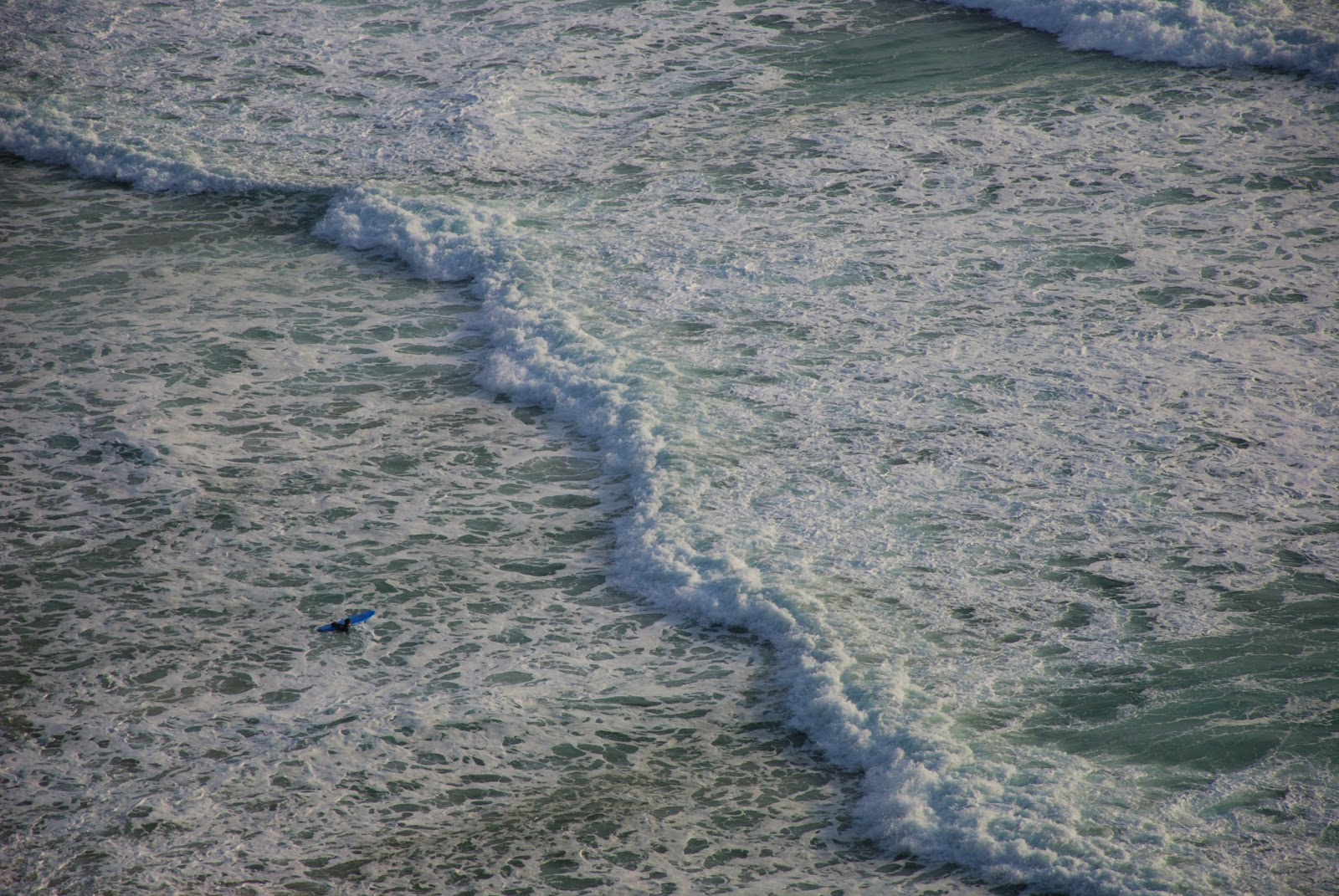
the lone surfer

Arrifana, (Algarve Region) Portugal

This beach, Arrifana, is one of the most sought after beaches for surfing in the Aljezur area located within the Southwest Alentejo and Vicentine Coast Natural Park.  It is protected by tall cliffs and has a stretch of sand of over 500 meters.

Tuesday, April 9, 2013

and more colorful boats...

Vila Nova de Milfontes, (Region of Alentejo) Portugal

Estrela da manhã (Morning star), yet another colorful fishing boat to be found throughout the many fishing ports of Portugal...

Monday, April 8, 2013

colorful fishing boats

Vila Nova de Milfontes, (Region of Alentejo) Portugal

Pérola de Milfontes translates into "Pearl of Milfontes".  These colorful fishing boats decorate the vast coastline of Portugal and instantly put a smile on my face.

Sunday, April 7, 2013

Vila Nova de Milfontes

Vila Nova de Milfontes, (Region of Alentejo) Portugal

Vila Nova de Milfontes is found along the western coast of Portugal at the point where the Mira River flows into the Atlantic Ocean.  It is a popular tourist destination in summer months due to its large number of beaches, ecological tourism and positioning within the Nature Park of the Southwest Alentejo and Vicentine Coast.  This park runs over 110 kilometers down the Portuguese coastline and shares its borders with the neighboring Algarve Region.

The port area you see in this picture is located in the estuary and provides a small source of income for the area.  The colorful wooden fishing boats have always been a weakness of mine and it's impossible for me to pass by without photographing them!

Saturday, April 6, 2013

Alentejo coastline

Zambujeira do Mar, (Region of Alentejo) Portugal

Beautiful beaches like this one are a common sight to see along the Alentejo coastline.

Friday, April 5, 2013

chapel on the beach

Zambujeira do Mar, (Region of Alentejo) Portugal

This is the same chapel from the previous post, with a very appropriate name: Chapel of Nossa Senhora do Mar - Our Lady of the Sea.  It is one of many stops along a walking trail called the Rota Vicentina, taking you 340 kilometers along the stunning Portuguese coastline with many views like this one.  The Rota Vicentina starts in Santiago de Cacém and ends in Sagres at the Cabo de São Vicente, the southwestern most corner of Portugal.

Thursday, April 4, 2013

Zambujeira do Mar

 
Zambujeira do Mar, (Region of Alentejo) Portugal

This little chapel sits facing the cliff-like beach of Zambujeira do Mar.  Beautiful!

Wednesday, April 3, 2013

windmill

Castro Verde, (Region of Alentejo) Portugal

These unique windmills used to be all over the Alentejo Region, but today they are harder to come by.  This particular windmill in Castro Verde stopped working by 1940 and was bought by the town in 2003.  It is now back in operation and open to the public for visits.
 

Tuesday, April 2, 2013

ceramic tiles in Castro Verde

Castro Verde, (Region of Alentejo) Portugal

These ceramic tiles, azulejos, decorate the backs of park benches outside the Basílica Real de Castro Verde.  It is quite common to see hand-painted tiles decorating public places throughout Portugal.  They are a treat for the eyes!

Monday, April 1, 2013

blue and white

São Marcos da Ataboeira, (Region of Alentejo) Portugal

No matter what town you stop in, big or small, you find the most adorable churches in Alentejo.  This town has just over 300 people.

Sunday, March 31, 2013

fields of flowers and windmills

close to Amendoeira da Serra, (Region of Alentejo) Portugal

I'll let this picture speak for itself.  Or better yet, comment and tell me what you think!

Alentejo is wonderful!

Saturday, March 30, 2013

Fonte dos Amores

Coimbra, (Centro Region) Portugal

I first knew about this part of Portuguese history by reading the play Corona de Amor y Muerte (Crown of Love and Death) by Alejandro Casona in my university literature class many years ago.

Pedro and Inês - a Portuguese love story

In 1340 the heir to the throne of Portugal was Prince Pedro, 20 years old at the time.  His father, King Afonso IV, had arranged his marriage to Lady Costanza, a Castillian Princess.  When she arrived Portugal for the first time to officially be his wife, Pedro actually set his eyes on one of her ladies-in-waiting, Inês de Castro, and fell madly in love with her.  They became inseparable lovers.  It created such a scandal that the King ordered his son to stop seeing Inês.  Pedro ignored his father's demand and hid Inês away in a castle away from the court.  After a while, the King exiled Inês to Spain, but even that did not keep them apart.  

Later, Princess Costanza died giving birth to a son.  Pedro sent for Inês and they lived together at Santa Clara-a-Velha in Coimbra.  It is also said that they were secretly married and had four children.  The lovers would often meet near the Quinta das Lágrimas (Manor of Tears) where the Fonte dos Amores (Fountain of Love) can be found.  His requests to be with Inês were always denied by his father.  Finally, in order for Pedro to forget his obsession with Inês, the King and his three counselors planned to kill her, so Pedro would consent to marrying a princess and ensure a peace treaty with the Kingdom of Castile.

The three counselors went and tragically cut off her head in 1355.  In 1357 Pedro became King of Portugal and immediately had Inês' murderers hunted down and killed.  Pedro refused to marry any other woman.  In 1360, Pedro announced that he had secretly married Inês in Bragança with witnesses and she was declared his legitimate wife, and therefore the lawful Queen of Portugal.  Pedro had her body exhumed and taken from the Monastery of Santa Clara in Coimbra to the Monastery of Alcobaça, where she was buried with an extraordinary ceremony.

Pedro's tomb was placed opposite Inês' (foot to foot), so that on the day of the last judgment, they would rise and look into each other's eyes, meeting once again and demonstrating that true love lasts forever.

Friday, March 29, 2013

Mondego River

Coimbra, (Centro Region) Portugal

Portugal and Spain share a number of rivers, but the Mondego river is the longest river located exclusively in Portuguese territory.  It starts in the Serra da Estrela mountain chain and flows into the Atlantic Ocean.  Reference is made to this river in a great deal of Portuguese literature as well as traditional music, fado de Coimbra.

Thursday, March 28, 2013

University of Coimbra

Coimbra, (Centro Region) Portugal

This university, considered to be the oldest in Portugal, was originally founded in 1290 in Lisbon by King Denis (Dinis), but later was moved to Coimbra in 1537 by King John III (João III).  This king brought in renowned university professors from all over the world and awarded many scholarships for students to study abroad.  The statue you see in the picture is dedicated to King João III.

The bell tower was built in the 18th century and can be easily spotted from many angles of the city.  It traditionally rang to mark the end of classes for students.

Wednesday, March 27, 2013

Monastery of Santa Clara-a-Velha

Coimbra, (Centro Region) Portugal

The first stones of this monastery were laid in the late 13th century on the banks of the Mondego River, however construction was delayed and really never got going again until the early 14th century, thanks to the support of Queen Elizabeth (Isabel), someone who dedicated her life to the poor.  (Click here for more information on this woman from an earlier post.)  This monastery had continuous flooding problems over the centuries and eventually had to be abandoned in the 17th century.  Another one was built on a hill nearby (Santa Clara-a-Nova) and the nuns (the Order of Saint Clare) relocated there.  Major work was done for 12 years and it reopened to the public in 2009 as an interpretation center.

In the distance, on the other side of the river, is the city of Coimbra sitting high on a hill.  The buildings rising up above the rest belong to the university with the clock tower peaking its way through.

Tuesday, March 26, 2013

Coimbra at dusk

Coimbra, (Centro Region) Portugal

A pleasant evening stroll around Coimbra...

Monday, March 25, 2013

ceramic tiles in Coimbra

Coimbra, (Centro Region) Portugal

These tiles are from the Psychology and Educational Sciences building at the University of Coimbra, the first university established in Portugal in the 13th century and also considered one of the oldest universities in Europe.  It is one of Portugal's largest universities with students of more than 70 different nationalities.

Ceramic tiles (azulejos - derived from an Arabic word meaning "polished stone") were introduced into Portugal through the Moors in the 15th century and later Portugal began making them themselves.  They represent a very important aspect of Portuguese architecture and have been used to cover the walls, floors and even ceilings of churches, palaces, homes and other public places through the centuries, not only for decorative purposes, but sometimes for temperature control as well.

Azulejos always attract my attention.  I think they are so beautiful and could look at them for hours!  They are everywhere in Portugal!

Sunday, March 24, 2013

Neptune fountain

Madrid, Spain

This fountain of Neptune, Roman god of water and the sea, is the sculpture decorating Cánovas del Castillo Square in the heart of Madrid.  Ventura Rodríguez was the architect who designed this square and Juan Pascual de Mena was the sculptor who carried out the work using white marble.  He started in 1782, but two years later died and work was taken over by his student, José Arias, among others, and work was completed in 1786.

Fans of the soccer team Atlético de Madrid flock here to celebrate their team's title victories.  Just 500 meters up the avenue, the Real Madrid soccer fans celebrate theirs in Cibeles Square.

Saturday, March 23, 2013

chariots on Alcalá Street

Madrid, Spain

Designed by the Basque sculptor Higinio de Basterra at the turn of the 20th century, these chariots adorn the BBVA building on Alcalá Street, number 16.  Twenty-five tons of copper, bronze, lead and iron were used to complete these masterpieces.

Walk along Alcalá Street with your head up, otherwise you'll miss many of these details!

Friday, March 22, 2013

Gran Vía / Alcalá

Madrid, Spain

In the heart of Madrid where the famous Gran Vía branches off Alcalá Street, two very emblematic buildings can be found, La Unión y el Fénix (original owners) on the left and the Grassy Building on the right.  La Unión y el Fénix insurance building was designed in 1911 by two French architects, Jules and Raymond Février.  In the 1970s, this building was sold to Metrópolis, another insurance company, who are the owners today.  The Grassy building contained homes and a prestigious watch shop on the ground floor run by Alejandro Grassy, a Swiss watchmaker.  This building was designed by a Spanish architect, Eladio Laredo, in 1915.  Today it is home to a watch museum.

I love observing the details of many of the magnificent buildings that can be found in Madrid.  Often times, with the hustle and bustle of life, we don't take the time to really step back and take a look at the beauty that surrounds us.

Thursday, March 21, 2013

Compañía Asturiana de Minas

Madrid, Spain

This building often gets overlooked.  If you're ever walking by Plaza España down Bailén street, stop and take a look at the detail of this wonderful building.  The Mine Company of Asturias had it built at the end of the 19th century, designed by the architect Manuel Martínez Ángel.  This architect also lived here, but was tragically shot outside his door by one of his students for having failed an important exam that would have entitled him to a prestigious job working for the city hall.  This building was used later by the government of Madrid as the central office for culture until 2012.  Today it sits empty... such a pity.

The next time I go to Madrid, I'll have to get a picture that isn't quite so crooked!

Wednesday, March 20, 2013

bubbles in the Plaza Mayor

Madrid, Spain

The Plaza Mayor of Madrid dates back to the late 1500s and has gone through many transformations over the centuries due to a series of fires in 1631, 1670 and 1790.  Nine entrances lead into this grand square which is lined with 237 balconies decorating the three-story residential buildings on all four sides.  Historically this square was used for bullfights, markets, soccer games, public executions and an array of other things.  Today it is surrounded by shops, restaurants and cafés and is used as a place to gather and entertain like the man in the photo making gigantic bubbles!

Tuesday, March 19, 2013

Atocha

Madrid, Spain

The first train station in Madrid was inaugurated in 1851 and destroyed by fire years later.  In the same space, this new station was built and opened in 1892 under the name Estación de Madrid Atocha (Madrid Atocha Railway Station), named after a nearby basilica Nuestra Señora de Atocha (Our Lady of Atocha).  The architect of the new station was Alberto de Palacio y Elissague, a former student of the famous Alexandre Gustave Eiffel.

Monday, March 18, 2013

Peña de Alájar

Alájar, (Huelva - Andalucía) Spain

This bell tower sits high above the town of Alájar and offers incredible views of the countryside of Huelva.  There is a pilgrimage every September 8th to the 16th century hermitage of Nuestra Señora de los Ángeles located just a few meters from this lookout point.

Sunday, March 17, 2013

Plaza del Marqués de Aracena

 Aracena, (Huelva - Andalucía) Spain

Due to the new growth at the end of the 19th century, many high-class families from Seville came here to build their summer residences.  These stately homes surround this square (Plaza del Marqués de Aracena) creating a fusion of modernism with Andalusian regionalism.  The building on the left, the Arias Montano Casino Society, was designed in 1893 by the Spanish architect Aníbal González, the same architect who designed the Plaza España in Seville.  This building was used as a social club for the thriving land owners and local aristocracy.

Saturday, March 16, 2013

Aracena

Aracena, (Huevla - Andalucía) Spain

Aracena is one of the 28 whitewashed towns in the province of Huelva that make up the Sierra de Aracena Natural Park system.  A 13th century castle built over an old Muslim fortress overlooks this town, known today for the frequently visited cave located directly below the castle extending over 2000 meters, of which more than 1000 meters can be visited.  Aracena is also known for its tasty Iberian cured ham produced from acorn-fed black pigs.

Friday, March 15, 2013

Grazalema

Grazalema, (Cádiz - Andalucía) Spain

The small town of Grazalema is one of many whitewashed villages found within the Sierra de Grazalema Natural Park.  This park is great for hiking, offering peaks as high as 1654 meters, but unfortunately this particular town, curiously enough, registers the highest annual rainfall in the entire Iberian Peninsula, despite the fact that many other places in Andalucía suffer from drought year after year.

Did it rain when I visited Grazalema?  -Yes, it did.  
When is the best time to visit?  June - September.  
What month on average registers the most rain?  -December.  
When did I visit?  -December!  
Oops!  :)

Thursday, March 14, 2013

benches

Tarifa, (Cádiz - Andalucía) Spain

Oh, the stories these benches have heard...  :)

Wednesday, March 13, 2013

Strait of Gibraltar

Tarifa, (Cádiz - Andalucía) Spain

The Strait of Gibraltar separates Europe from Africa and joins the Atlantic Ocean with the Mediterranean Sea.  A little over 14 km (under 9 miles) marks the distance between the two narrowest points of this body of water.  Note the silhouette of Africa in the distance in this picture.

Because of the strong winds caused by the straits, Tarifa is a wind and kitesurfing mecca.  One of the beaches in Tarifa goes on for 10 km (6 miles) along the southwestern coastline of Spain giving surfers plenty of room to catch some waves.  Birdwatching, especially the migration of storks to and from Africa in spring and autumn, is also a popular activity for many people, along with whale and dolphin watching.

Tuesday, March 12, 2013

Tarifa

Tarifa, (Cádiz - Andalucía) Spain

Tarifa is a wonderful town on the southernmost coast of Spain and is considered the southernmost point of the European continent as well.  It is a laid-back whitewashed town full of narrow labyrnth-like streets and was under Muslim rule between 710-1292.  The church in the picture (San Mateo) was built on the remains of an ancient mosque in 1506.

This picture was taken from the roof-top of one of the coolest places I've ever stayed, Pensión Correo, an old restored house with a patio in the heart of the historical town center.